
When a Superyacht Stays Still: The Backlash Against Mark Zuckerberg’s Launchpad.
There are moments when the world seems to tilt just a little, and suddenly a story about a stranded skiff in Alaska becomes a referendum on billionaire responsibility. In early August, that tilt happened off the coast near Juneau, where a 21-foot skiff ran out of fuel and drifted into the cold quiet of Southeast Alaska.
Nothing dramatic. No storm. No cinematic peril.
Just a small boat, a bigger ocean, and a call for help.
Nearby — closer than anyone expected — sat Launchpad, Mark Zuckerberg’s nearly 400-foot superyacht.
A floating palace of steel and glass, rumored to cost somewhere between $300 and $390 million. The kind of vessel that looks less like a boat and more like a thesis statement about modern wealth.
And yet, when the Coast Guard issued an assistance broadcast, it wasn’t Launchpad that answered. (Maybe Zuck’s aversion to coffee needs a rethink?)
It was a cruise ship.
Passengers aboard the Wilderness Legacy later described the moment the captain announced that Zuckerberg’s yacht had been closer to the stranded skiff but was not responding.
One witness said the reaction was “near unanimous booing.”
You can almost hear it — the collective exhale of people who felt they were watching a metaphor unfold in real time.

This was the first headline: Zuckerberg’s $300M Yacht Was Nearby as Cruise Ship Rescued Stranded Skiff.
It’s the kind of headline that writes itself, and the internet wasted no time sharpening it.
The Optics of Opulence
Another headline followed: Superyacht Launchpad Makes Headlines in Alaska.

This one leaned into the contrast — the helipad, the cinema, the spa, the pool. The yacht’s grandeur became part of the story, as if the vessel’s amenities were somehow complicit in the decision not to respond.
It didn’t help that Zuckerberg and his family weren’t even aboard at the time.
The yacht was simply there, a silent witness with a full crew and an empty obligation.
Luxury has a way of amplifying scrutiny.
A small lapse becomes a symbol. A missed call becomes a narrative.
But Launchpad is more than a checklist of amenities.
At roughly 118 meters — longer than a football field — it is one of Feadship’s largest builds, delivered in 2024 with exterior lines by Espen Øino and interiors by Zuretti.
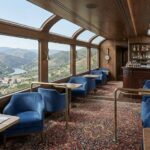
Its most distinctive feature is a fully enclosed, curved-glass observation lounge that sits like a quiet pod above the rest of the ship. There’s a swimming pool, a beach club, space for two helipads, a gym, a cinema, a spa. It was designed to feel less like a floating hotel and more like a self-contained world that can move with the weather, the light, or a sudden need to disappear for a while.
It also travels with a companion: a large support vessel, often called Wingman, that carries the tenders, the water toys, the extra crew, and the logistics so the main yacht can stay quieter and more guest-focused.
One version of the support ship even had a basketball court painted across its deck — a small, almost endearing detail that feels very Zuckerberg.
The whole arrangement is less about pure display and more about creating a private, mobile base for a family that lives under constant public attention.
Still, when a vessel that large stays still while a smaller one does the work, the optics write their own story.
The Explanation That Didn’t Quite Land
Then came the third headline: Zuckerberg Disputes Claim His Yacht Ignored Stranded Boat.
A spokesperson clarified that the crew was monitoring a different radio channel.
The Coast Guard’s broadcast, they said, was not a formal distress call.
By the time the crew reviewed it, the cruise ship was already towing the skiff to safety. Zuckerberg and his family were not on board.
It’s a reasonable explanation.
It might even be true in every technical sense. But public perception rarely hinges on technicalities. It hinges on stories, and this one was already taking shape.
The Data That Fueled the Fire
Ars Technica added another layer: Vessel Tracking Data Shows Cruise Ship Passed Launchpad to Reach Skiff.
There’s something about data — cold, neutral, unfeeling — that makes a narrative feel more real. The tracking showed the Wilderness Legacy sailing past the stationary Launchpad to reach the stranded boat. It was the kind of detail that made the story feel less like a misunderstanding and more like a missed opportunity.
The Backlash That Followed: Public Booing and Social Media Backlash.
People love a story where the “little guy” steps up while the “big guy” stays still. It’s primal. It’s familiar. It’s the kind of narrative that spreads quickly because it feels like a parable. And in a world where billionaires are increasingly treated as cultural symbols, Launchpad became an easy target.
There’s a quiet irony here.
The yacht is named Launchpad — a word that belongs to startups and new beginnings, to the idea of lifting off.
Yet in this moment it became a symbol of something that stayed put. The name itself invites a certain reading: what does it mean to own a vessel designed for movement and still find yourself, in the public imagination, fixed in place?
Maritime Law Context: Assistance vs. Distress Obligations.
This is where nuance enters the room.
Vessels are required to respond to distress calls, but this was an assistance broadcast — a softer category, a request rather than a command. Legally, Launchpad may have had no obligation to act.
But culturally? Socially? Symbolically?

The Real Story Beneath the Headlines
The backlash against Launchpad wasn’t really about maritime law. It wasn’t even about Zuckerberg, not directly. It was about the optics of a massive superyacht — an avatar of modern wealth — remaining still while a smaller, humbler vessel did the work.
People weren’t only booing the yacht.
They were reacting to what it represented in that particular frame: extreme privacy paired with extreme capability, a floating home designed for disconnection in a life that is rarely allowed to disconnect.
Launchpad is built for exactly that kind of privacy. Tracking is sometimes limited. Interior photos are scarce. It has been spotted in the Mediterranean, the Caribbean, the Pacific, Alaska, British Columbia — places chosen for distance as much as beauty.
For a family living under constant observation, the appeal is obvious. A place that moves with you. A place that can simply be quiet.

And yet the same qualities that make it a sanctuary also make it a lightning rod when the world is watching.
Maybe the crew truly didn’t hear the call. Maybe the situation was never dangerous. Maybe the cruise ship was already on its way. All of that can be true at once.
But the story stuck.
Because sometimes the world tilts just a little — and a stranded skiff becomes a mirror. Not only of wealth or responsibility, but of the strange tension between the desire to disappear and the expectation that those who can disappear still somehow remain available.
What does “re-centering” look like when your backyard is the open ocean? And what do the rest of us expect from the people who can afford that kind of quiet?
The answers are rarely simple. The questions, though, keep arriving.
About Launchpad
A few details help anchor the yacht at the center of this story — not as a villain, but as a character with its own quiet presence.
Name: Launchpad
There’s something gently ironic about the name. Launchpad doesn’t reach for old‑money gravitas or mythological lineage; it feels more like a tech founder’s wink. A place where ideas, rest, and maybe reinvention are meant to “launch” from. The name carries a kind of optimism — or at least the branding of it.
Scale That Feels Tangible
At roughly 118–119 meters (about 387–390 feet), Launchpad is longer than a football field. Built by Feadship and delivered in 2024, it sits in the $300‑million‑ish tier of superyachts — a category where numbers stop feeling real unless you pair them with something human.
For example: The support boat trailing behind Launchpad is itself the size of many people’s dream yacht. That’s the kind of scale that makes you pause.
Signature Design Moments
The standout visual is the curved‑glass, fully enclosed observation lounge perched on the upper deck — a pod-like space that looks both futuristic and contemplative, as if designed for someone who wants to watch the world without being seen by it.
Other features read like a checklist of modern maritime luxury:
- A swimming pool with a movable floor
- A beach club that opens to the sea
- Helipad(s)
- Gym and spa/beauty spaces
- Cinema
- Jacuzzi
The exterior comes from Espen Øino, the interiors from Zuretti — though the inside remains mostly unseen. The yacht is deliberately private, and its silence is part of its design language.