
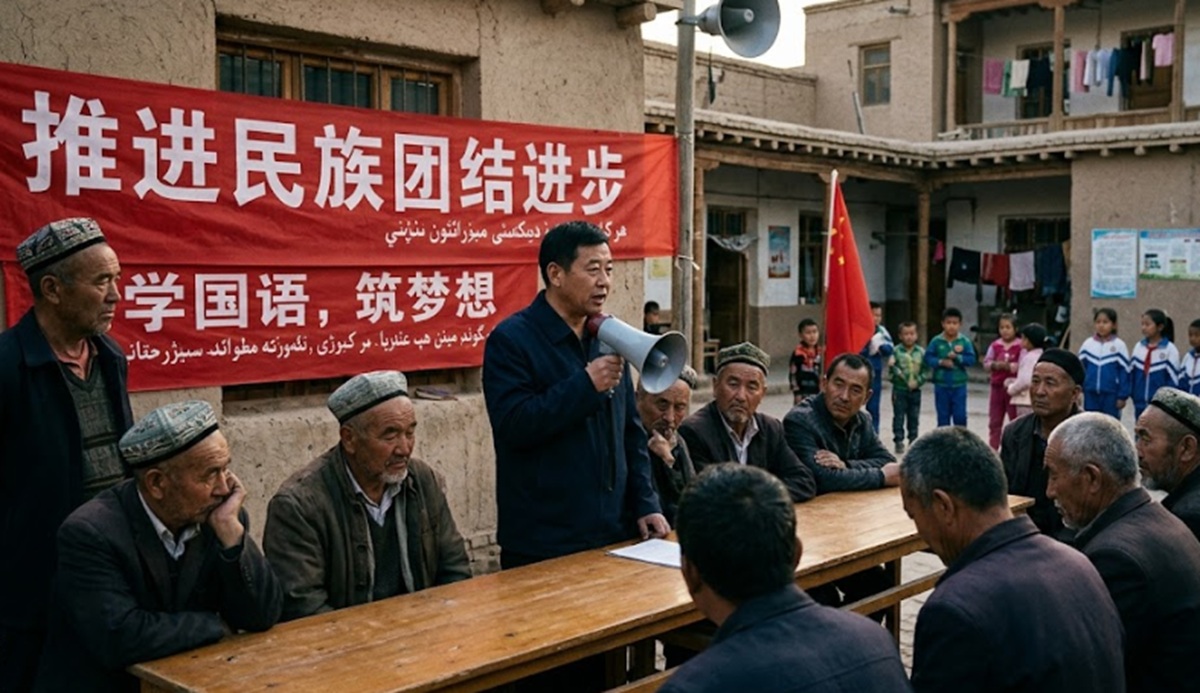
Inside China’s newly enforced Ethnic Unity Law.
Beijing is eliminating minority autonomy, mandating Mandarin, and institutionalizing transnational repression to force absolute alignment with the CCP.
Beijing’s Tightening Grip on Identity
A newly enacted sweeping legislative measure under Xi Jinping mandates national and cultural cohesion across the country. The law heavily emphasizes early childhood integration and establishes Mandarin as the foundational language of instruction, signaling an aggressive push toward a single, unified national identity.
One Majority, Dozens of Minorities
Geographically immense, China officially recognizes 56 distinct ethnic classifications. However, the demographic landscape is heavily lopsided: the Han population accounts for roughly 90% of the citizenry, leaving the remaining 10% distributed among dozens of smaller, diverse communities.
Shifting Away from Historical Autonomy
Historically, Beijing permitted its minority populations a moderate level of localized self-governance. For decades, these regions maintained distinct legal leeway to preserve their regional dialects, manage their own educational frameworks, and cultivate independent cultural traditions.
The Mandarin Mandate
The recently ratified Law for the Promotion of Ethnic Unity and Progress fundamentally alters that historical precedent. By codifying Mandarin as the obligatory standard for schools nationwide, the central government aims to dismantle localized distinctiveness in favor of an overarching “One China” cultural consciousness.
Shaping Minds at School and Home
Under these guidelines, the state’s vision permeates both public and private life. Schools are tasked with building a centralized national psyche through state-approved curricula, while families are legally encouraged to cultivate deep-seated patriotism and allegiance to the ruling party in their children from an early age.
The Economic Justification
Defending the policy, authorities frame the linguistic mandate as an economic equalizer. Beijing contends that fluency in the national language equips youth from autonomous border regions—such as Xinjiang, Tibet, and Inner Mongolia—with the necessary tools to compete in the broader domestic job market.
Integrating Housing and History
The legislation reaches deep into domestic infrastructure. It directs municipal planners to use residential housing policies to encourage physical ethnic integration, while simultaneously ordering cultural hubs like museums and libraries to curate exhibits that highlight state-approved historical narratives.
Global Reach and Extraterritorial Clout
Crucially, the statutory authority extends well beyond the physical borders of the state. The legal text grants Beijing the framework to penalize or prosecute international entities, organizations, or individuals accused of inciting separatism or challenging the state’s definitions of national solidarity from abroad.
A Decade of Homogenization
This policy marks the culmination of a decade-long agenda. Since taking office in 2013, Xi Jinping has consistently prioritized a rigid, nationalist ethos centered on party loyalty, maintaining immense structural pressure on distinct border communities to assimilate.
Human Rights Alarms
International observers have raised severe alarms over the development. Human rights monitors, including leadership at the United Nations, warn that the mandates could drastically erode remaining protections for religious expression, regional languages, independent assembly, and cultural heritage.
The Threat of Transnational Repression
Legal experts and activists are particularly deeply concerned about the clauses targeting overseas populations. Critics argue that the law provides a thin veneer of domestic legality for cross-border surveillance, effectively institutionalizing the harassment of dissidents living in exile.
Beijing’s Official Counter-Defense
The Chinese Ministry of Foreign Affairs has aggressively pushed back against external pushback, labeling international criticism as politically motivated interference. State spokespersons emphasize that the framework is designed to legally shield minority rights while anchoring national stability.
The Party’s Unified Vision
Coinciding with major Communist Party milestone celebrations, leadership has doubled down on the mandate. In key addresses, Xi Jinping reiterated that the legislation remains a foundational pillar for securing the unbreakable, long-term solidarity of the nation’s diverse population.