
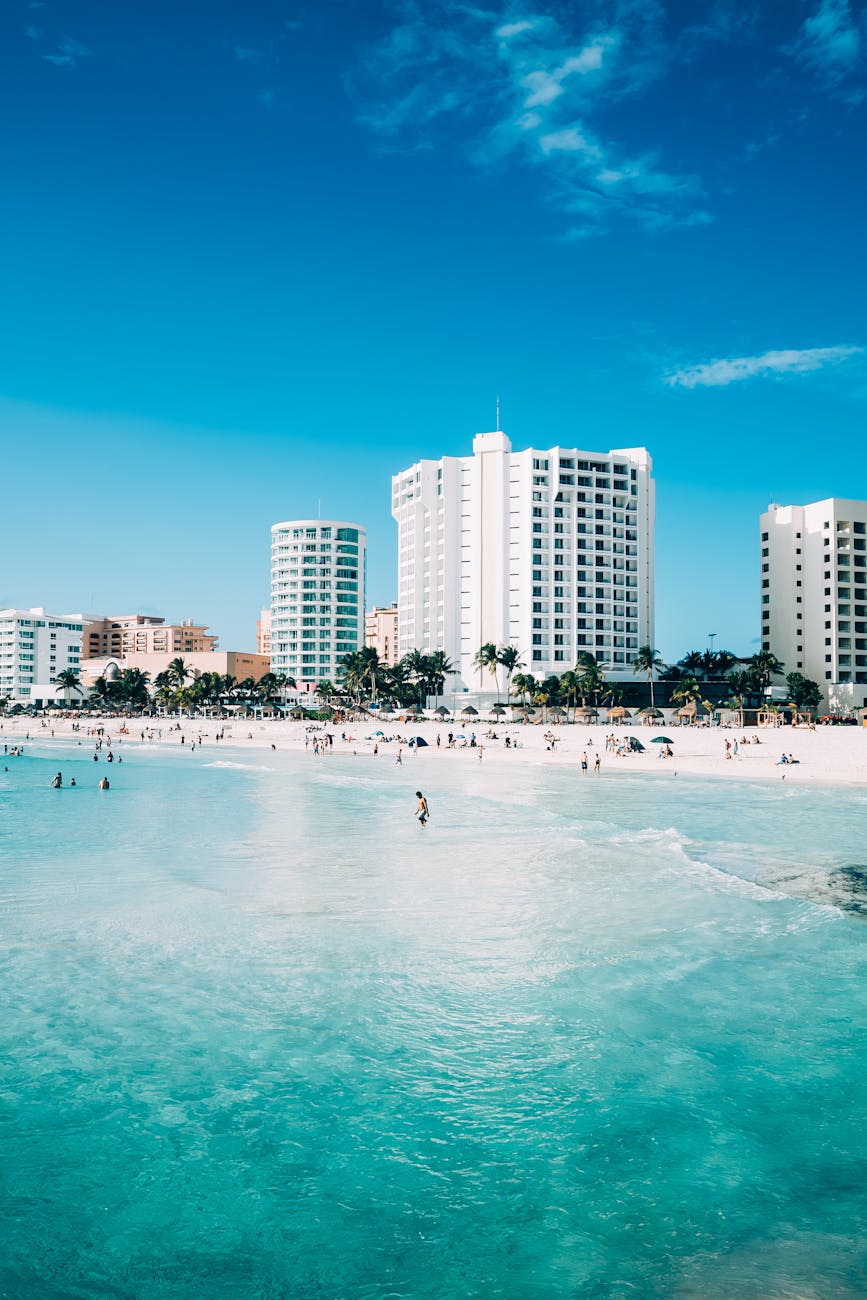
I was 22. I couldn’t afford the all-inclusive resort in Mexico. The one with the infinity pool and the breakfast buffet and the staff who anticipate your every need before you know you need it.
So I rented a cheap Airbnb a few blocks from the beach instead.
That financial constraint gave me something the resort never could: access to the actual place I was visiting.
This is what I call the Shoestring Paradox. The less money you have to spend on travel, the more authentic your experience becomes. It sounds backward. It challenges everything the travel industry sells you.
But after years of moving between luxury resorts and budget neighborhoods, between polished excursions and broken Spanish conversations, I’ve learned something most travelers miss.
Money doesn’t buy you insider access to a culture. Vulnerability does.
The Mechanics of the Paradox
That walkable Airbnb in Mexico forced me into the local ecosystem immediately. I needed bread, so I found the panadería. I needed water, so I learned where to buy a 20-liter garrafón. I had to figure out trash day and locate the lavandería around the corner.
These weren’t vacation activities. They were chores.
But here’s what happened: those mundane tasks created dozens of small interactions with actual residents. The woman at the panadería started recognizing me. The guy at the water store gave me directions to a taco stand his family runs. The lavandería owner told me which beach the locals prefer.
Research backs this up. 47% of travelers believe that spending a lot of money on a trip could actually dilute a more immersive and authentic experience. That number jumps to 55% among Gen Z. Even more telling: 75% of respondents say the trips they value the most are ones that do not cost a lot of money.
The paradox isn’t just anecdotal. It’s measurable.
The Awkwardness Was the Bridge
One afternoon in that Mexican neighborhood, I needed to find a local market. My Spanish was terrible. I approached a man on the street and stumbled through my question with broken vocabulary and hand gestures.
If I’d been fluent, or if I’d hidden behind a polished translator app, the interaction would have been a transaction. Efficient, sanitized, forgettable.
But the awkwardness changed everything.
That linguistic friction stripped away the professional veneer I usually carry. It turned a simple question into a shared human moment of trial and error. Because I couldn’t lean on precise vocabulary, we had to rely on hand gestures, laughter, and intent.
The local I was speaking with didn’t just give me directions. He walked me two blocks over to the specific stall he liked, introduced me to the vendor, and made sure I wasn’t getting the “gringo price.”
Science explains why this works. Studies show that in unexpected and serendipitous tourism encounters causing visitors’ disorientation, visitors’ level of emotions, understanding and interaction with foreign environments is increased, leading to what researchers call “existential authentic moments.”
You need to be disoriented by unfamiliar environments to increase your perceptions of authenticity. My linguistic struggle wasn’t a bug. It was the feature that made the memory stick.
What Polished Travel Actually Costs You
Luxury travel operates as a series of paid insulation layers. High-end resorts, private excursions, pre-vetted guides. You move through a destination physically present but socially buffered.
You arrive with every need pre-calculated, which sends a subconscious signal: you don’t need the local community’s input. Your interactions become purely transactional, which keeps the local population in a “service provider” role rather than a “neighborly advocate” role.
I’ve watched this play out in Apalachicola, in Rockland, in affordable Caribbean islands where budget travelers and luxury travelers occupy the same physical space but experience completely different realities.
The luxury travelers miss the 5:00 AM rhythm of the oyster boats. They miss the quiet conversations at the dive bar where locals discuss fishing quotas and maritime weather. They miss the spice markets where vendors debate the best way to use fresh nutmeg.
They’re not bad people. They’re just insulated.
Tourism research reveals that resort enclaves lead to economic leakage, where revenue generated by tourism is not retained within the local economy. Large tourism companies dominate the market and profits get repatriated to external investors. One researcher describes it bluntly: “Luxury resorts line pristine beaches while local people live in mud huts and shacks literally right behind the properties.”
The luxury model isn’t just culturally insulating. It’s structurally designed to bypass local economies entirely.
Why Vulnerability Buys What Money Cannot
When that local walked me to the market stall and protected me from tourist pricing, he wasn’t just being hospitable. He was bringing me inside the local economy.
Most people think luxury travel buys you insider access. But being visibly broke and struggling actually earns you something money cannot purchase: genuine local advocacy.
In a world of polished tourism, raw vulnerability is the only currency that buys this kind of help. People naturally want to help those who show an authentic, unpretentious effort to engage with their world.
Research on stranger interactions supports this. Studies show people derive substantial benefit from social connection but often refrain from talking to strangers because they have pessimistic expectations. However, when someone signals they need help, it activates reciprocity.
My broken Spanish signaled I wasn’t a polished tourist. I was someone who needed help. That vulnerability opened doors that wealth actively closes.
The Memory Problem with Frictionless Experiences
I’ve stayed at a luxury resort in Turks & Caicos. The memory is a soft-focus blur of perfection: a specific shade of turquoise water and the weight of a high-thread-count robe.
It’s pleasant. But it’s generic.
Because every need was anticipated by a buffered service staff, there was no reason for my brain to record the details. It was a “plastic” experience where I was merely a passive observer of a beautiful scene.
Contrast that with Grenada, where I wasn’t insulated by a resort wall. I remember the specific, humid smell of the spice market. I remember the exact sound of a local vendor’s voice as we debated nutmeg preparation. I remember navigating steep streets and finding the local bus route.
One memory is a dream you forget upon waking. The other is a story you carry in your bones because you actually lived it.
Neuroscience explains this difference. The most vivid autobiographical memories tend to be of emotional events, which are recalled more often and with more clarity and detail than neutral events. Emotional arousal enhances the storage of memories, creating lasting memories of our more important experiences.
The resort experience was frictionless, which means it lacked the emotional arousal that encodes permanent memories. The Grenada market, with its humidity and negotiation and navigation challenges, had exactly the emotional intensity that creates permanent neural pathways.
Daily Life vs. Insulated Life
My days in that Mexican neighborhood looked like residency because they were governed by maintenance and basic needs rather than a pre-packaged itinerary.
I was out early to find fresh bread. I navigated the neighborhood to locate drinking water. I learned trash collection schedules. I found the route to the lavandería.
These tasks forced me into the local rhythm. Not the tourist rhythm. The actual rhythm of the place.
Research shows that 42% of travelers want the opportunity to “live” in a new place, rather than just visit it. Furthermore, 87% say stumbling upon an activity on a trip is more rewarding than planning for it.
This validates what budget travel accidentally creates: serendipity through necessity.
When you’re doing laundry in a foreign country, you’re not on vacation. You’re temporarily living there. That distinction changes everything about how you interact with the place and how it interacts with you.
The Geography of Authenticity
Affordable Mexico destinations and low-key Caribbean islands preserve cultural character that high-end resort areas have traded away for tourist dollars.
Places like Apalachicola and Rockland resist tourist trap conventions because they remain working towns first, tourist destinations second. The oyster docks operate on their own schedule. The fishing boats leave at 5:00 AM whether you’re there to photograph them or not.
When you stay in these places on a budget, you’re forced to adapt to their rhythms rather than expecting them to adapt to yours.
I’ve watched this from my own sailboat, sipping coffee while the sun rose and seagulls flew overhead, observing local fishermen taking off through the morning dew. Traveling on a sailboat means taking your home with you, which creates a different dynamic than a resort.
Home is not a vacation experience. A luxury hotel is.
The off-beat stay in Mexico or the sailboat in Apalachicola doesn’t feel like a typical “vacation experience.” You feel more like you’re living daily life, not insulated life.
What This Means for You
You might be reading this with money for the Turks & Caicos resort but wanting the Grenada memory instead.
Here’s the single most effective tactical choice: outsource nothing that involves a basic human need.
Instead of letting a concierge book your transport or a resort chef curate your meals, you must intentionally introduce friction into your day.
Go to the local grocery store or market yourself to find ingredients. Navigate the public bus system instead of taking a private car. Ask a local resident—not a hotel employee—where they personally go to fix a broken sandal or buy a cup of coffee.
These small, “un-polished” chores force you out of the observer bubble and into a role where you are a guest dependent on local knowledge.
You aren’t just visiting a place anymore. You are temporarily living in it.
That’s the only way to earn a memory that actually sticks.
The Real Value of Travel
The travel industry has convinced us that comfort equals value. That luxury equals authenticity. That spending more money buys you better experiences.
But 75% of travelers say the trips they value the most are ones that do not cost a lot of money. The data contradicts the marketing.
I’ve experienced both sides. I’ve had the high-thread-count robes and the infinity pools. I’ve also navigated foreign laundromats with broken Spanish and found the panadería at dawn.
The expensive memories fade into a pleasant blur. The cheap ones remain vivid years later because they required something from me. They demanded vulnerability, adaptation, and genuine human connection.
The Shoestring Paradox reveals that financial constraints can inadvertently lead to richer, more immersive travel experiences.
Not because poverty is romantic. But because necessity forces you into authentic local ecosystems where real cultural exchange happens.
You can choose this even with money. You just have to be willing to step outside your comfort zone and embrace the unknown. You have to be willing to be a little bit lost, a little bit awkward, a little bit dependent on the kindness of strangers.
That’s where the real travel happens. Not in the resort. Not in the private excursion. But in the humid spice market, the neighborhood panadería, and the broken Spanish conversation that turns a stranger into a guide.
That’s the experience money can’t buy. But vulnerability can.